
Well Pressure Tank Air Pressure Chart: 30/50, 40/60 & Safe Checks
Quick answer: For a conventional pre-charged well pressure tank, set the tank’s air precharge to approximately 2 PSI below the pressure switch’s cut-in setting, measured with the pump turned off and the water side drained to 0 PSI. That means 28 PSI for a 30/50 switch or 38 PSI for a 40/60 switch. This rule is common for standard diaphragm/bladder tanks, but your tank and control manufacturer always take precedence.
If your water pressure keeps dropping, the pump starts every few seconds, or a gauge reading looks wrong, it is frustrating because the numbers can seem to contradict one another. The key is that tank air precharge, water pressure at the gauge and switch cut-in/cut-out are three different measurements. Once you separate them, the checks make a lot more sense.
| Typical pressure switch | Pump starts | Pump stops | Tank air precharge (empty tank) |
|---|---|---|---|
| 20/40 PSI | 20 PSI | 40 PSI | 18 PSI |
| 30/50 PSI | 30 PSI | 50 PSI | 28 PSI |
| 40/60 PSI | 40 PSI | 60 PSI | 38 PSI |
| 50/70 PSI | 50 PSI | 70 PSI | 48 PSI |
For conventional pre-charged tanks. The manufacturer may require a different setting for constant-pressure systems or special designs. Source: Amtrol Well Tank Support.
Want the full explanation? Below is a safe measurement checklist, a troubleshooting guide for pump cycling and a clear distinction between the common tank styles. For other symptoms such as unexpectedly losing water, start with our well pump troubleshooting overview instead.
Which pressure gauge do you actually need?
A pre-charged tank usually has an air valve (often similar to a tire valve) under a plastic cap. You check the air precharge there with a suitable low-range air-pressure gauge, after draining the water side. The separate plumbing gauge displays water pressure while the system operates. Buying the wrong type of gauge won’t help.
As an Amazon Associate I earn from qualifying purchases. This is a shopping search, not an endorsement of an untested model. Make sure your tank uses a Schrader-style air valve; gauge calibration and compatibility matter.
How the tank, switch and gauge work together
A conventional well system uses a pump, a pressure switch (or electronic control), a gauge and a tank with a compressible air volume. When water is used, air pressure pushes stored water into the plumbing. At the switch’s cut-in threshold, the pump starts. At cut-out, the pump stops. The pressure tank helps extend the time between starts and reduce harmful short cycling.
With a 40/60 setup, the pressure switch typically starts the pump near 40 PSI and stops it near 60 PSI. A precharged diaphragm tank’s empty air pressure would commonly be 38 PSI. You do not need to bring the air valve up to 60 PSI; doing so would be a major mistake.
The pressure gauge on the plumbing tee measures the current system’s water pressure, while the tank air valve is used to check precharge in an isolated and depressurized system. When the tank contains water, air is compressed and its pressure rises. Those numbers should not be compared as if both were empty-tank settings.
How to check pressure tank precharge safely
This checklist applies to a standard pre-charged bladder or diaphragm tank with an accessible air-charge valve and a conventional pressure-switch system. If you have a variable-frequency drive, constant-pressure controller, older air-over-water tank or uncertain model, stop and consult its manufacturer’s instructions.
- Find the label. Note the tank model, maximum pressure rating and the controller’s operating range. If the pressure-switch range is unknown, don’t guess from a sticker alone; the installed settings may have changed.
- Turn off pump power. Use the appropriate labeled breaker or disconnect. If you cannot identify it confidently, use a professional.
- Open a suitable water fixture or drain point. Relieve pressure until the water-side gauge reads 0 PSI and water flow stops. If the gauge is broken or pressure will not release, do not proceed.
- Find the tank’s air valve. On common pre-charged tanks, it is beneath a cap near the top. Never loosen the tank’s threaded manufacturing plug, pipe connections or fittings.
- Measure precharge with an appropriate air gauge. Touch the gauge to the air valve briefly and record the reading. If water comes out of the air valve, the bladder/diaphragm may be damaged; contact the manufacturer or an installer.
- Compare with the correct target. A 30/50 switch typically calls for 28 PSI; 40/60 calls for 38 PSI. Consult your tank manual for exceptions.
- If adjustment is permitted, proceed carefully. Add or release air only as the manufacturer instructs, within the tank’s pressure rating. Do not use unregulated compressed air. If pressure does not hold, investigate rather than repeatedly topping it up.
- Restore the system per its manual. Close the drain, return power safely and observe normal pressure cycling from a safe distance. If cycling or pressure behavior remains abnormal, obtain service.
What happens if the pressure is too low or too high?
Tank air charge is too low
The tank may hold less usable water between pump cycles, so the pump switches on more frequently. In severe cases, a failed bladder or excessive waterlogging can produce very rapid short cycling. That matters because repeated motor starts can contribute to wear. But short cycling also occurs with leaks, poor tank sizing, pressure-switch faults and other problems, so air precharge should be checked—not automatically blamed.
Tank air charge is too high
If precharge is set above the pump’s cut-in pressure, the tank may become effectively empty of water before the pump starts, causing a noticeable interruption in water delivery. The remedy is not to raise the pressure-switch setting blindly; first verify the switch range and tank specification.
The tank repeatedly loses its air charge
A one-time correction that quickly fails again suggests a leak at the air valve, damage to the air chamber or a membrane issue, depending on tank design. Visible rust, water at the air valve or obvious damage may point toward replacement, but an experienced technician should confirm before the tank is removed.
How to tell whether the pressure tank has failed
An aging tank is a reasonable suspect if pressure changes are abrupt, the pump starts after only a few seconds of water use, or the air precharge cannot be maintained. Still, you want evidence before replacing an expensive vessel. Here are clues and their limits:
- Water coming from the air valve: On many bladder/diaphragm tanks this is a strong sign the internal separation has failed; follow the manufacturer’s advice.
- Frequent pump starts: Can indicate inadequate drawdown, low precharge, leaks, bad controls or a tank that is too small.
- Heavy tank or dull tapping sounds: Not reliable as a standalone diagnosis. Some tanks sound different by design.
- Corrosion at seams or base: Have the unit inspected; pressure vessels can be hazardous if structurally compromised.
- Gauge needle jumping: May reflect water hammer, switch behavior or a faulty gauge—not always tank failure.
Why tank capacity is not the same as usable water
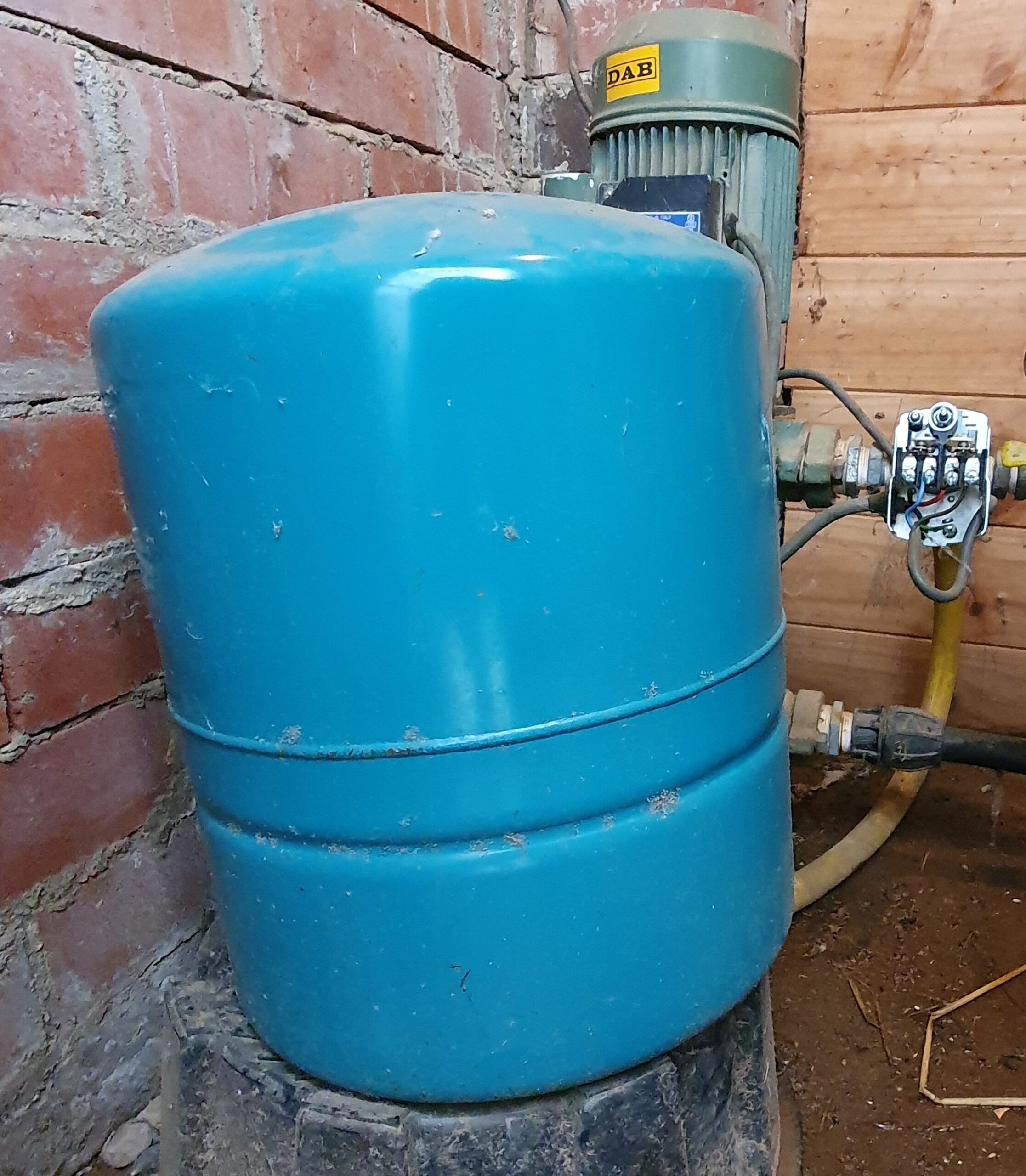
This confuses many homeowners: a pressure tank labeled 44 gallons does not deliver 44 gallons between pump starts. Some of that volume is occupied by compressed air. The drawdown rating—the usable water between cut-out and cut-in at your actual pressure setting—is what matters for cycling and minimum pump runtime.
A starting sizing relationship for a conventional system is target usable drawdown (gallons) = pump flow (GPM) × desired minimum pump runtime (minutes). For example, a 10 GPM pump with a one-minute minimum run target needs roughly 10 gallons of drawdown. This is not the same as a nominal 10-gallon tank. Some motors, controls and manufacturers recommend different runtime targets. If you do not know your pump’s flow rating, our guide to well pump types and sizing helps explain the GPM and pressure details a professional will need.
Check the manufacturer’s drawdown chart at your real 30/50 or 40/60 setting. Increased pressure range often reduces available drawdown for the same vessel. If tank sizing is confusing, our complete pressure tank hub explains the system components in more detail.
Common problems that are not solved by adding air
- Water delivery falls to zero while a pump keeps running: Could involve well yield, leaks, pump wear or blocked flow. Begin with our no-water pump diagnosis.
- Pressure is good until a faucet is opened: A clogged sediment cartridge, constricted pipe or undersized system can restrict flow.
- Pump won’t reach cut-out pressure: May involve a leak, low well water, weak pump, obstruction or incorrect control setting.
- Switch clicks repeatedly: Requires evaluating precharge, tank condition, plumbing leaks and switch installation.
- Unpleasant water odor or staining: Not fixed by tank air. Consider appropriate water testing and treatment.
Conventional versus constant-pressure systems
If you have a variable-speed pump controller or constant-pressure package, do not automatically apply the 2-PSI rule. Some systems use substantially different precharge targets or smaller tank volumes. Use the actual controller and tank manufacturer documentation. A single number copied from a generic blog can cause poor performance.
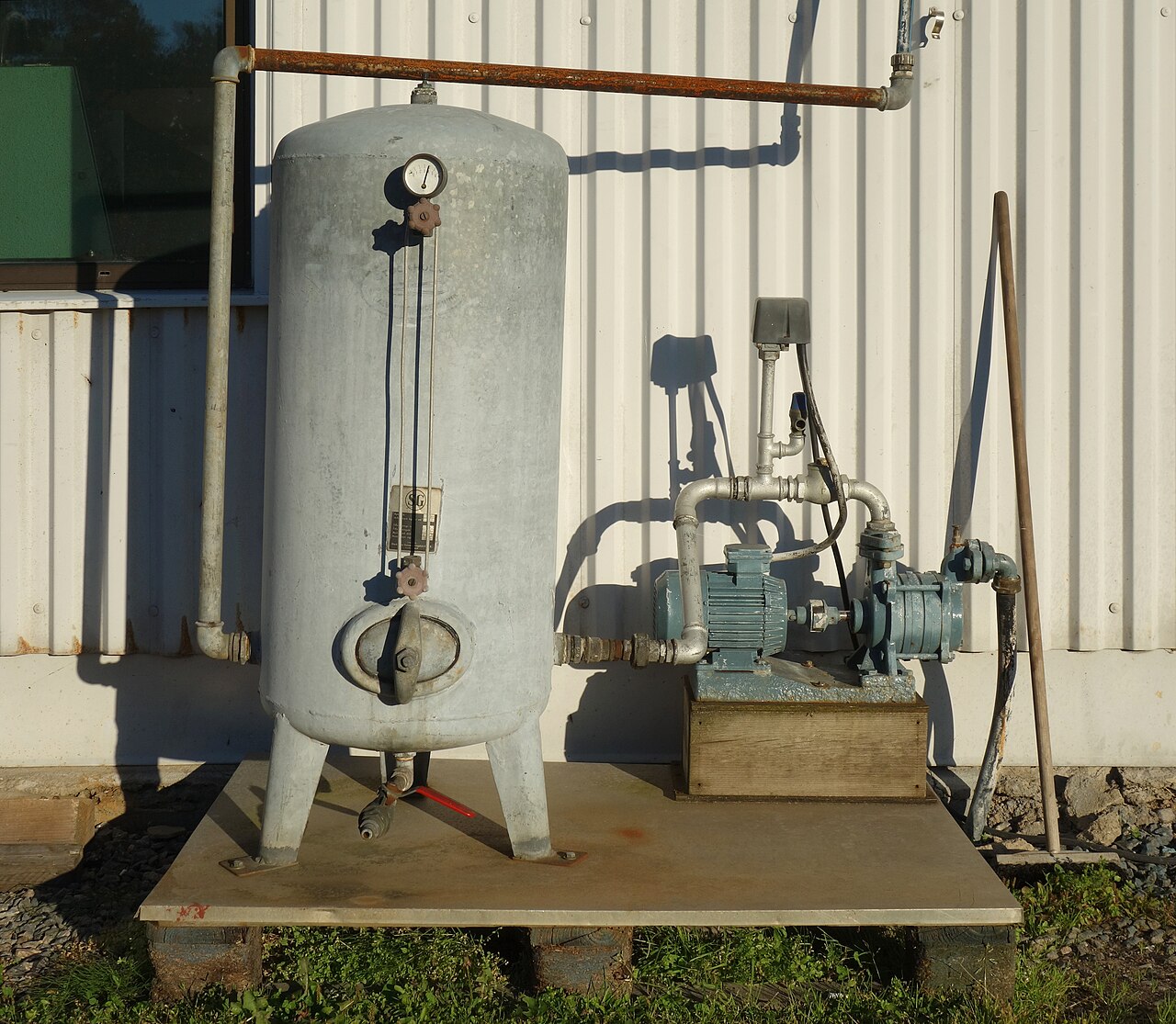
Likewise, older galvanized air-over-water vessels can use an air volume control rather than a sealed bladder. The procedure for those systems is different; identifying the tank style comes before taking a measurement.
Frequently asked questions
Should my pressure tank be 38 or 40 PSI for a 40/60 switch?
For a typical pre-charged diaphragm/bladder tank, it is 38 PSI with the water side at zero pressure—not 40 or 60. Confirm with the tank label and manufacturer.
What PSI should a 30/50 well pressure tank have?
Commonly 28 PSI air precharge, checked with pump power off and the water side drained. The pump itself normally starts near 30 PSI and stops near 50 PSI.
Do I need to drain the tank before using an air gauge?
Yes. Measuring precharge while the tank is full gives the compressed operating air pressure, not the empty-tank precharge. Proper depressurization is necessary both for safety and an accurate setting.
Can I use a car tire gauge?
A compatible, accurate low-pressure air gauge may work if the tank uses a Schrader-style valve. Accuracy in the operating range matters. Do not use the water-line gauge for the air valve.
How long should the well pump run?
There is no universal runtime that fits every motor, control system and household. A minimum cycle duration is usually influenced by motor manufacturer guidance, pump capacity and tank drawdown. A qualified installer should size for the actual equipment.
Will raising pressure to 60 PSI improve my shower?
Not simply by adding more air to the tank. The pump’s pressure controls determine the water-side operating range, and changes must be within the ratings of every component. Low shower flow may instead involve filters, fixtures or plumbing losses.
The bottom line
If you have a conventional 30/50 well system, 28 PSI is the usual empty-tank air precharge. For a 40/60 system, it is typically 38 PSI. The bigger win is knowing how to measure it safely and recognizing when a tank adjustment is not the right fix. If your pump cycles unusually often, first record the actual gauge behavior and match it to the tank and switch manual.
Sources and how this guide was prepared
- Amtrol — Well Tank Support (2 PSI below cut-in and safe precharge measurement procedure).
- Amtrol — Well-X-Trol Pressure Tank Sizing Guide (pressure range, pump capacity and drawdown considerations).
- Franklin Electric — Submersible Pumps Owner’s Manual (waterlogged tanks and rapid cycling).
Editorial disclosure: This is a researched explainer, not a claimed first-hand product test or an inspection of your system. Follow the manual for your actual equipment and use qualified assistance for electrical, pressurized-system or safety-critical work. See our editorial policy.